


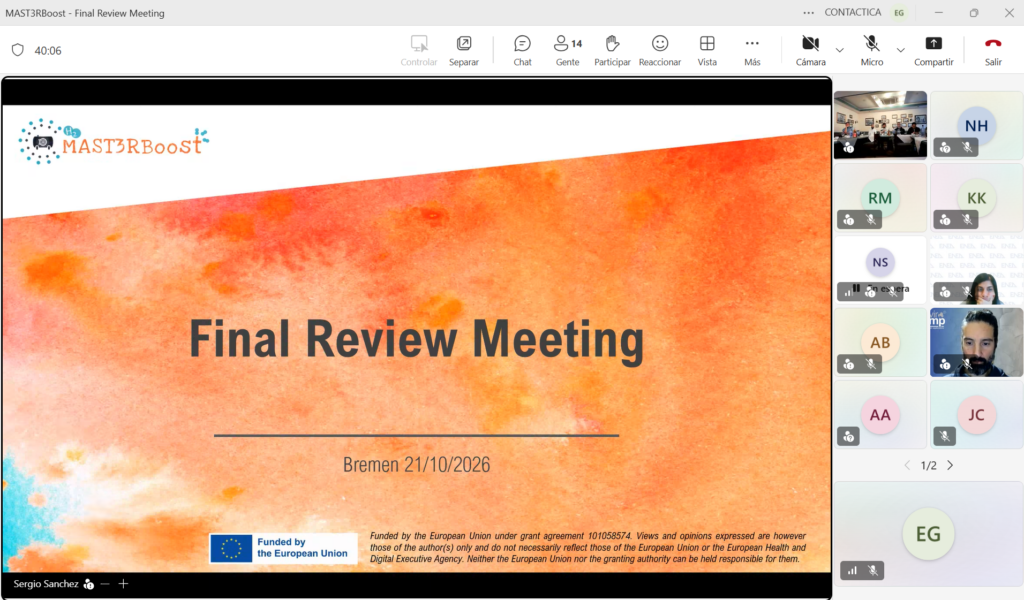
MAST3RBoost Holds Its Final Review Meeting to Assess Project Progress and Results
MAST3RBoost holds Its Final Review Meeting to Assess Project Progress and Results On 21 October 2026, the MAST3RBoost consortium held its final Review Meeting in Delmenhorst, Germany, bringing together project partners, the Project Officer and an external expert to review the progress achieved and discuss the project’s main results. Throughout

MAST3RBoost and IH-MIE Join Forces to Explore Funding Opportunities and Future Collaboration in the Hydrogen Sector
MAST3RBoost and IH-MIE Join Forces to Explore Funding Opportunities and Future Collaboration in the Hydrogen Sector On 21 July 2026, the MAST3RBoost and IH-MIE projects successfully hosted the online webinar “Funding Opportunities & Future Collaboration in the Hydrogen Sector”, bringing together researchers, industry representatives, SMEs and innovation stakeholders to discuss

MAST3RBoost Holds Its Final General Assembly, Marking the Successful Conclusion of the Project
MAST3RBoost Holds Its Final General Assembly, Marking the Successful Conclusion of the Project On 16 July 2026, the MAST3RBoost consortium gathered online for its Final General Assembly, bringing together all project partners to review the achievements of the past years, discuss the final technical and communication activities, and reflect on